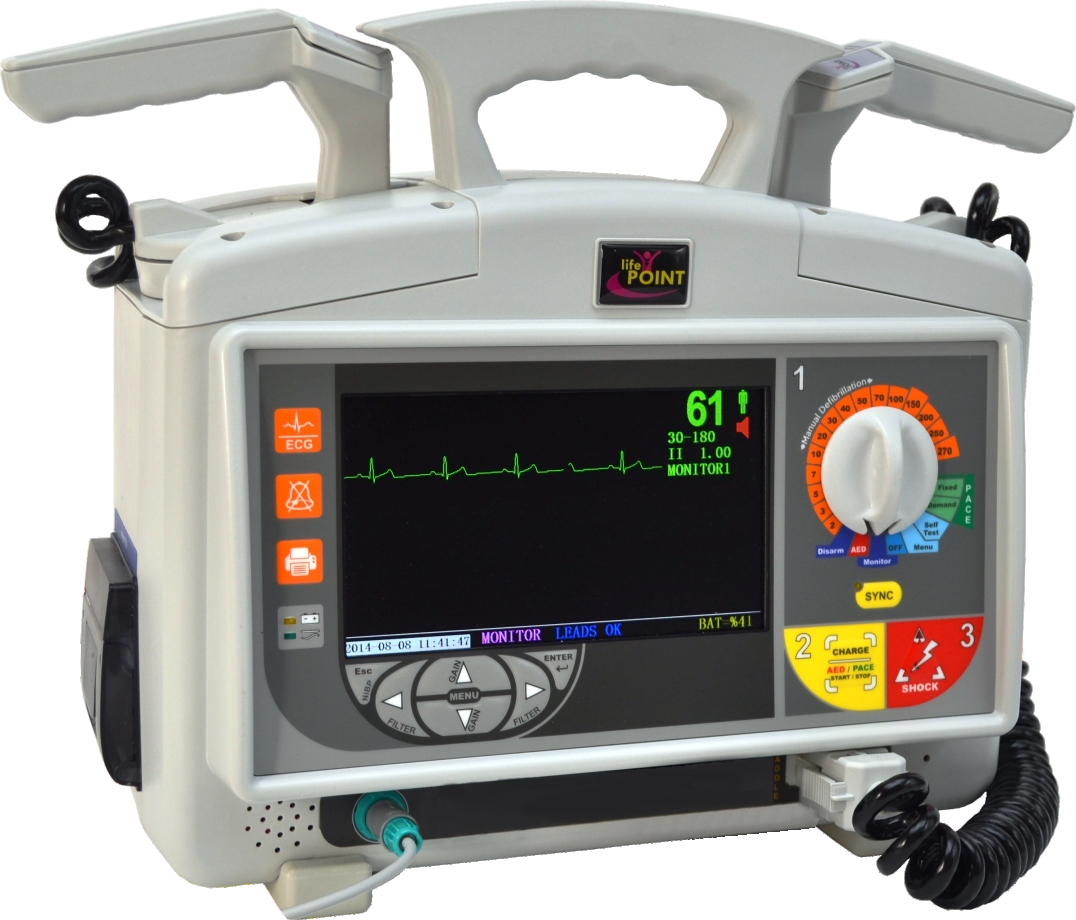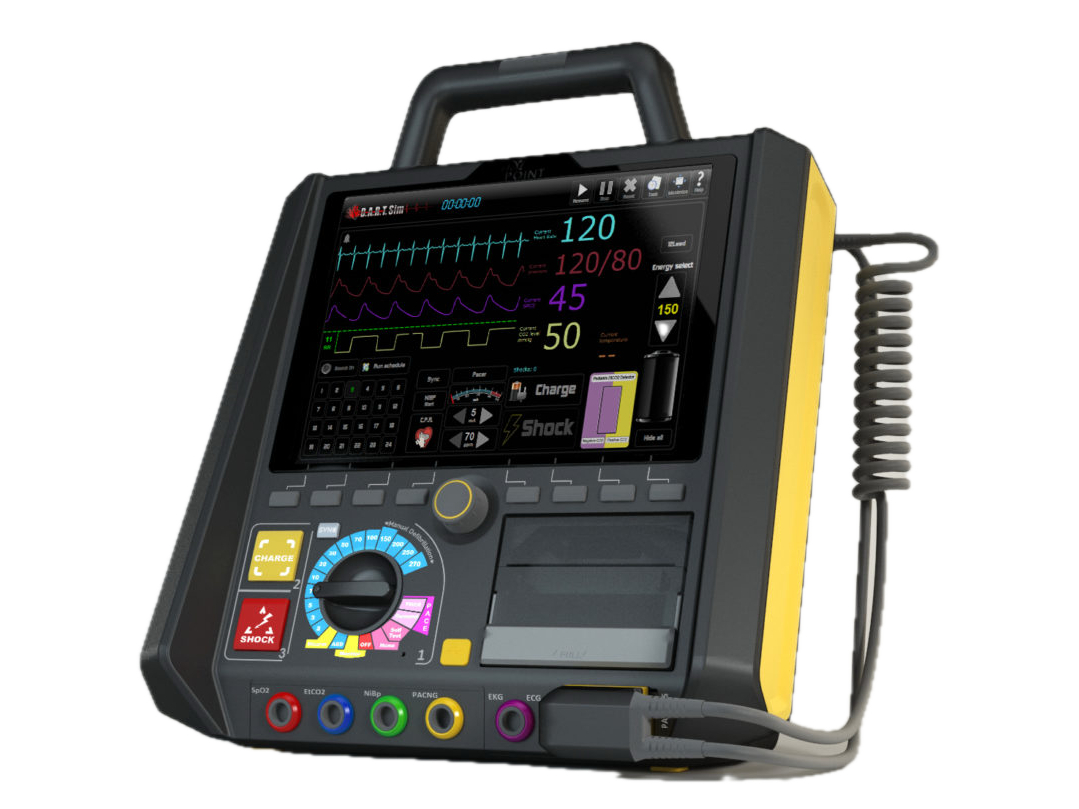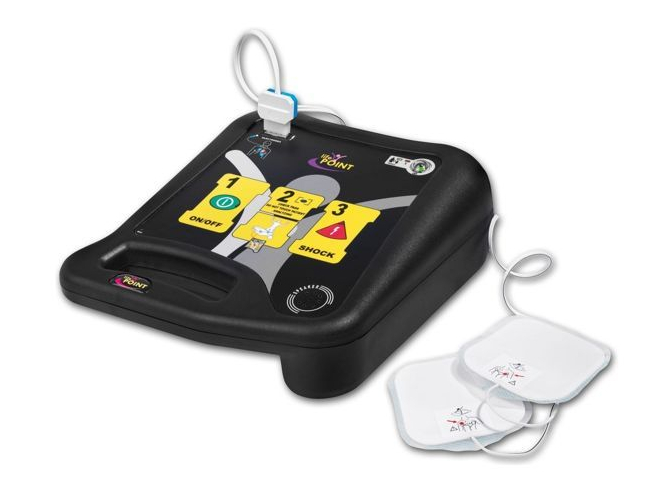



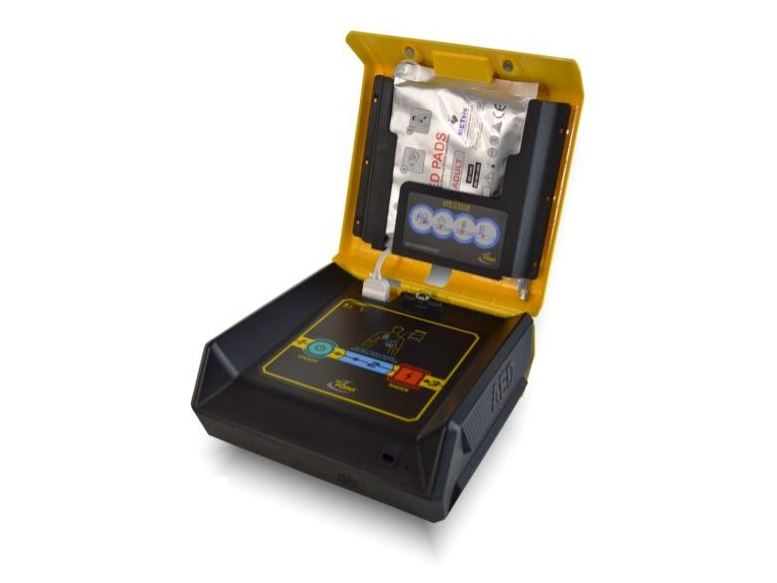
Automated External Defibrillator (AED)
Life-Point bPLUS AED Automated External Defibrillator
Automated external defibrillator that runs periodic self-tests, reports faults with a visual warning and guides the user with voice and visual prompts.
- Three-step voice and visual guidance
- Periodic self-test; red warning sign on fault
- Adult 150-200-200 J · child 50 J steps
- Configurable disposable pads
- ECG, event and voice recording; mini USB transfer
- 5-year warranty
- Applications
- Family health centres, schools, sports clubs, hotels, public buildings, transport hubs
Defibrillator
- Operating mode
- Fully automatic
- Waveform
- Truncated biphasic
- Energy steps
- Adult 150 – 200 – 200 J · Child 50 – 50 – 50 J
- Charge time
- Typically < 10 s at maximum energy
- Shock capacity
- Typically 200 shocks (full battery)
- Impedance measurement
- 25 – 175 Ω
- Pads
- Disposable (configurable)
ECG analysis
- Analysis time
- Typically < 10 s
- Lead
- DII
- Bandwidth
- 2 – 25 Hz
- Detection
- Pacemaker detection, motion detector
Battery and self-test
- Battery
- LiMnO2, 12 V 4500 mAh
- Self-test schedule
- Every start, daily, monthly, every 6 months
- Self-test scope
- Battery, hardware, software, capacitor
Records
- Data
- ECG signal, events and voice recording
- Transfer
- METsis AED software (mini USB)
Physical
- Dimensions
- 11 × 23 × 27 cm
- Weight
- 2,950 g (battery and accessories included)
- Operating conditions
- 0 – 50 °C, 10 – 95 % RH
- Storage conditions
- -20 – 60 °C
METsis Medikal reserves the right to change technical values without prior notice.
Why Life-Point bPLUS AED?
Life-Point bPLUS AED is an automated external defibrillator that can be used by anyone with first aid training, without medical education. Once the pads are attached to the patient's chest, the device analyses the heart rhythm, delivers defibrillation if needed and guides the user at every step with voice and visual prompts.
Thanks to its periodic self-test function, it warns the user with a red warning sign on the device if a fault or negative condition is detected. The device should therefore always be kept where it can be seen and reached easily.
Where should an AED be available?
- Family health centres and primary care facilities
- Patient transport ambulances, rescue teams, police and fire vehicles
- Schools, sports clubs, sports halls and stadiums
- Shopping centres, airports, hotels and restaurants
- Public buildings, places of worship, residential complexes
- Train, bus and metro stations, beaches and swimming pools
For use on children and the step-by-step procedure, see our Pro AED page and frequently asked questions.