


Biphasic Defibrillator
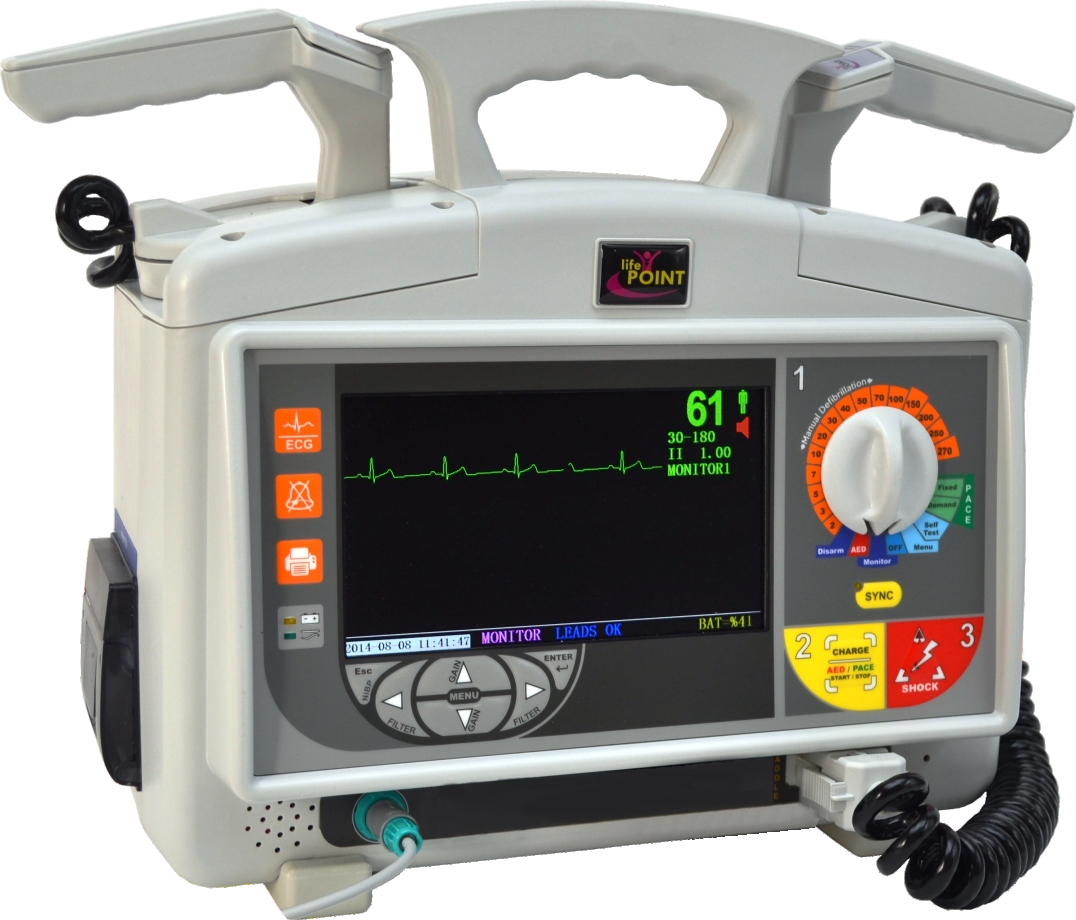
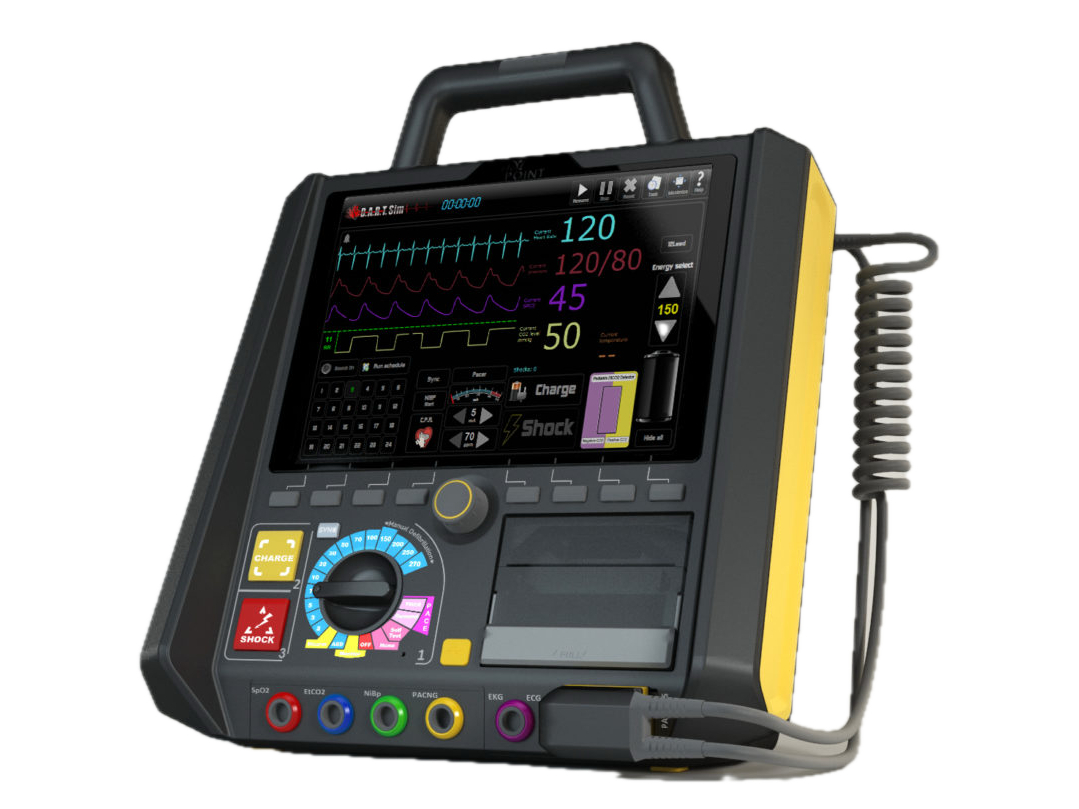
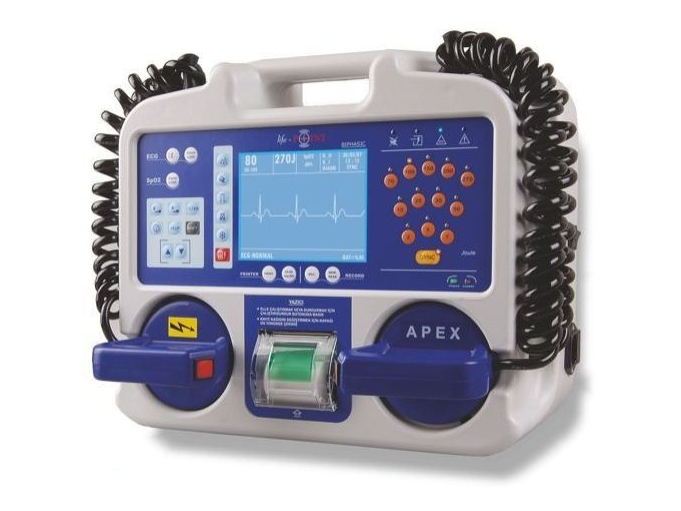
Life-Point Pro Biphasic Defibrillator
Biphasic defibrillator-monitor with manual and synchronised modes, a 5.7-inch display and thermal printer; 2–270 J energy selection.
- Biphasic waveform, 2–270 J
- Manual and synchronised cardioversion
- 5.7" LCD display, 12-lead ECG
- Thermal printer (50 mm)
- Paediatric paddles
- Optional SpO2, NIBP, trolley and ambulance bracket
- Applications
- Hospitals, ambulances, clinics, university hospitals, dialysis centres
Defibrillator
- Waveform
- Biphasic
- Operating mode
- Manual / Synchronised
- Energy selection
- 2 – 5 – 7 – 10 – 20 – 30 – 70 – 100 – 150 – 200 – 270 J
- Shock capacity
- 100 shocks at 270 J (full battery)
- Paediatric paddles
- Yes
ECG
- Leads
- DI, DII, DIII, aVR, aVL, aVF, V1–V6
- Filters
- Monitor I, Monitor II, Strong, Surgery, Diagnostic
- Heart rate range
- 0 – 300 bpm
- Monitoring time
- 4 hours (full battery)
Display and printer
- Display
- 5.7" LCD
- Sweep speed
- 25 – 50 mm/s
- Printer
- Thermal, 25 – 50 mm/s, 50 mm × 30 m paper
Physical
- Dimensions
- 40 × 15 × 33 cm
- Weight
- 8.5 kg (battery and paddles included)
- Mains
- AC 220 V, 50–60 Hz (±20 %)
- Operating / storage
- 0 – 40 °C, 30 – 95 % RH · -20 – 55 °C
Optional
- Modules
- SpO2, NIBP
- Accessories
- Trolley, ambulance bracket (EN 1789)
METsis Medikal reserves the right to change technical values without prior notice.
About Life-Point Pro
Life-Point Pro is a biphasic external defibrillator that delivers a short, high current to the heart so that a fibrillating heart can return to its normal rhythm. Defibrillation applied during ventricular fibrillation or pulseless ventricular tachycardia depolarises the myocardium, aiming to restore normal sinus rhythm.
With its biphasic waveform, large display and ease of use, Life-Point Pro is intended for professional users who need a defibrillator frequently, such as hospitals, ambulances, clinics, university hospitals and dialysis centres.
Biphasic vs monophasic defibrillation
Conventional monophasic defibrillators send current in one direction and need high energy to be effective. In biphasic technology the current flows in one direction and then reverses. Studies have shown that biphasic waveforms can achieve successful defibrillation with less energy, which helps reduce side effects such as skin burns.